Reading Passage: The Florida Panther
By T Hales
| | |
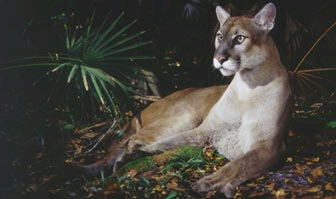
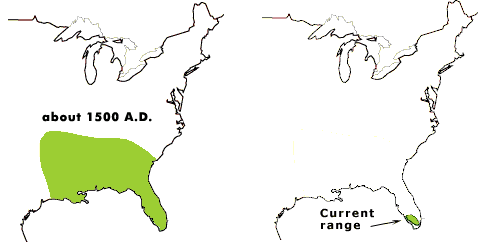
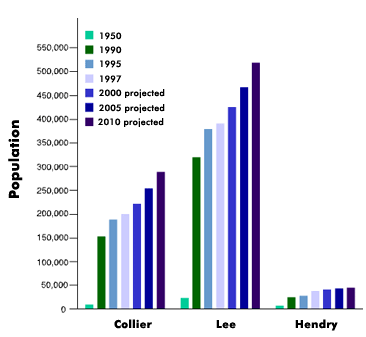
| 1 | The state animal of Florida, the Florida Panther is part of an ever-dwindling species. Today there are only 50-70 of these panthers left that roam freely in the wild. Once panthers numbered in the thousands and inhabited the entire southeastern United States, including Florida, Georgia, Alabama, Louisiana, Mississippi, South Carolina and Arkansas. Today, however, what’s left of the population is restricted to a small pocket of forest in south, which is shrinking due to over-development. |
| 2 | The Florida panther’s history is intertwined with that of Florida itself. It coexisted peacefully with the Native Americans who first lived in Florida and was chosen by the children of Florida today as the state animal. Named Puma Concolor coryi, it is one of 20 sub-species of cougar and has a life span of about 12 years. The genus Puma, designates the Florida panther as a cougar or mountain lion. Until just recently the genus of the Florida panther was felis. Concolor means of one color and this is suitable since Panther have a single-colored tawny fur. Finally, coryi comes from Cory, the name of one of the early ecologists who worked with the Florida panther. |
| 3 | The Florida panther is a creature of natural beauty. As a baby is it speckled with white spots to camouflage it in the shade of its den. As it grows these spots eventually disappear. Its long, graceful tail is also a distinguishing feature on its body growing to about 2/3 the length of its body size. This helps to balance the cougar when it is about to pounce. |
| 4 | |
| 5 | Under these conditions, even the publicly owned lands that have been set aside as wildlife preserve are not enough to ensure the panthers survival. The panther depends on private lands for 52% of its current range. On the other hand, there are ways that private lands can be compatible with panther survival; panthers can survive along side of cattle grazing, and sustained yield forestry. However, citrus farming is a great danger to the Florida panther and thousands of acres in the south Florida area have been committed to farming in the future. |
| 6 | Today efforts are being made to save the panther. Underpasses have been created to prevent road kill deaths and money has been set aside to capture and radio collar panthers for research purposes. Additionally, the U.S. Fish and Wildlife Service has set up programs to mix breed Florida panthers with Texas cougar populations. Mating the two naturally compatible species will increase gene flow into the Florida panther population minimizing inbreeding deaths and genetic defects. |
| 7 | Although the efforts are yielding results it is still uncertain whether they will be enough since the panther population remains small and unstable. In addition, there has been very little progress in controlling social issues and land problems that infringe on the panthers habitat. It is certain that a continued and increased effort will be required to save this species. |

According to the passage, which of the following statements is not true?
The Florida Panther, as stated in paragraph 3, has a tail that is two thirds its body length to help it maintain balance when it pounces. If a panther has a body length of 1.2 meters, how long is its tail?
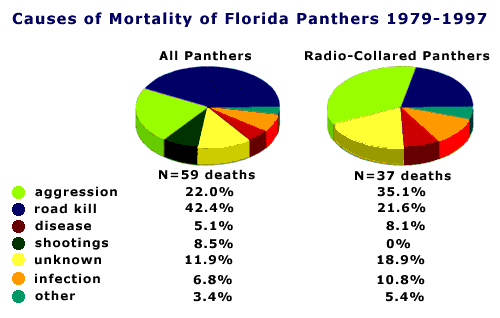
In paragraph 4, the circle graph of radio-collared panthers gives an N of 37 meaning that there were 37 radio-collared animals that were killed. Using the information about the causes of death below the graph, how many of the 37 were killed by disease?
Which detail does NOT support the main idea of the article?
Which two paragraphs are NOT essential to the main idea of the passage?
What is the meaning of the word mortality as used in the chart at the beginning of paragraph 4?
How has the creation of underpasses helped to decreases panther deaths?