Carpenter
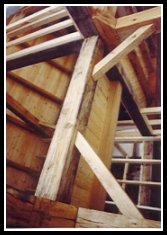
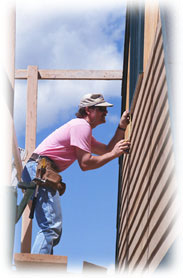
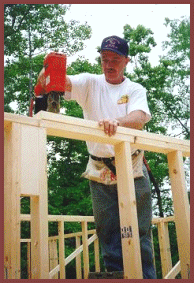
Carpenter Carpenters work with more than just wood, they also have to have knowledge of fiberglass, plastic, and drywall. Some of the projects a carpenter could be employed to do include the construction of buildings, highways, bridges, docks, industrial plants, boats, ships, doors, and partitions. As a carpenter you may find yourself building frames for concrete pouring, laying wood floors, and installing cabinets. You could also specialize in furniture construction, repair, and refinishing. It is important that a carpenter follow building instructions and blueprints exactly. When a large structure is being built, the plans must first be approved by an inspector for safety. If a carpenter doesn't follow the plans exactly, changing the structure, he may be endangering workers and others. Exact measurements of lengths, angles, and heights are required for many carpentry jobs. Similar to a brick mason, straight lines and precise angles are necessary for a carpenter to be good at their job. A carpenter can be self employed or work for a company and (in 2000) most make between 21.00 an hour. You can become a carpenter through on-the-job training, formal training programs, or a vocational education. If you intend to get a vocational education you can expect to take courses such as Carpentry Math, Cabinetry Math, Design, Instillation, Estimating, and Blueprint Reading. Also, apprenticeships are available through unions and local organizations.
Local Companies
Additional Links
|
Advertisement